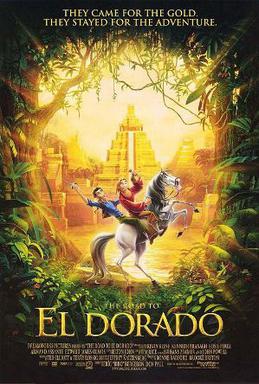
The Golden Question: Did "Der Weg Nach El Dorado" Find Its Shine, or Was It Lost in the Dino Stampede?
In the vibrant, competitive landscape of late 1990s animation, Dreamworks Animation emerged as a formidable challenger to the long-established dominance of Disney. Fresh off the success of "Antz," a direct counter-programming move against Disney's "A Bug's Life," Dreamworks set its sights on another epic adventure: "Der Weg nach El Dorado" (The Road to El Dorado). Released in 2000, this vibrant tale of two Spanish con artists, Miguel and Tulio, stumbling upon the legendary city of gold aimed to carve its own niche. However, its theatrical run coincided with the impending roar of Disney's visually ambitious "Dinosaur." This begs a compelling question: did the charm and wit of Der Weg Nach El Dorado truly get a chance to shine, or was it inevitably overshadowed by the looming prehistoric giants that would soon dominate screens?
The German title, Der Weg Nach El Dorado, perfectly encapsulates the journey-centric narrative of the film. It promised an adventure steeped in myth and discovery, a swashbuckling romp through uncharted territories. Yet, despite its promising premise and a core creative team, the film often finds itself debated when discussing Dreamworks' early output. Was it a hidden gem, or a valiant effort that simply couldn't compete with the technological spectacle of its contemporaries?
A Quest for Visual Identity: When 2D Met the Dawn of CGI
From its very first frames, Der Weg Nach El Dorado attempts to captivate with a distinct stylistic choice. The film opens with a sequence imbued with the spirit of classic live-action adventure comedies, reminiscent of the charismatic pairings of Bob Hope and Bing Crosby. Miguel and Tulio, two quick-witted conmen making a living off rigged dice in a Spanish port, are swiftly thrust into an exhilarating escape, finding refuge aboard a ship destined for the New World. This "cloak and dagger" introduction is stylistically confident, showcasing dynamic character animation and an engaging narrative hook that immediately draws the audience in.
However, as the adventure progresses, some critics observed a discernible shift, or rather, a missed opportunity for stylistic consistency. While "Antz" had impressed with its clever camera angles, simulated tracking shots, and a unique, non-Disney-esque story, Der Weg Nach El Dorado, despite its potential, didn't always maintain a clear, distinctive visual signature. The ambitious scope of the journey – the tumultuous sea voyage, the perilous trek through the jungle, and the grand architecture of El Dorado itself – could have served as a canvas for truly unique artistic expression. Instead, the animation often appeared somewhat flat, the backgrounds occasionally lifeless, and the character movements at times schematic, especially when compared to the highly detailed and often groundbreaking animation standards set by its competitors. This perceived "technical deficit" in pure animation detail and immersive world-building was a critical point of discussion, particularly when weighed against the photorealistic ambitions of Disney's "Dinosaur," which premiered in the same year, pushing the boundaries of CGI realism for animated features. While Der Weg Nach El Dorado offered glimpses of visual magic, such as the vividly rendered golden treasures, these moments, though enchanting, sometimes felt too fleeting to define the film's overall aesthetic.
Unearthing Character Gold: Miguel, Tulio, and Chel's Dynamic
Where Der Weg Nach El Dorado consistently shines brightest is in its character development and the captivating dynamics between its protagonists. Miguel and Tulio are not your typical animated heroes. They are flawed, self-serving, and driven by a thirst for gold, yet their unwavering friendship and witty banter anchor the film. Their journey from con artists to reluctant deities in El Dorado allows for rich comedic interplay and moments of genuine emotional growth, particularly as they grapple with the moral implications of their deception and the true meaning of friendship.
Adding another layer of complexity is Chel, a sharp, cunning indigenous woman who quickly sees through Miguel and Tulio's facade. Chel stands out as a fascinating character, offering a stark contrast to the often idealized "Noble Savage" archetype seen in films like "Pocahontas." She is pragmatic, resourceful, and possesses her own agenda, challenging the protagonists and providing a powerful, independent female voice. Her intelligence and agency make her far more than a simple love interest, injecting the narrative with a refreshing dose of realism and moral ambiguity. Indeed, Miguel & Tulio's Journey: The Untapped Potential of El Dorado's Characters is often cited as a missed opportunity for the film to delve deeper into its unique character dynamics and societal commentaries. The intricate social structure of El Dorado, the complexities of its High Priest Tzekel-Kan, and the initially trusting, then suspicious, populace provided ample narrative threads that, while explored, perhaps didn't reach their full potential, leaving viewers wanting more depth from this engaging ensemble.
The Soundtrack's Echo and El Dorado's Enduring Appeal
The musical landscape of Der Weg Nach El Dorado also faced scrutiny. Featuring songs by the legendary Elton John and a score by the celebrated Hans Zimmer, the expectation was naturally high, especially given their previous, Oscar-winning collaboration on Disney's "The Lion King." However, some critics found Elton John's contributions to be somewhat subdued, and Zimmer's score, while competently crafted, occasionally felt routine rather than revolutionary. While the music served the story adequately, it perhaps lacked the distinctive, anthemic quality that often elevates animated films to cultural phenomena. It's a testament to the high bar set by the creators themselves that anything less than groundbreaking felt like a "loaned" or "safe" musical approach rather than a truly unique aural identity for El Dorado.
Despite these criticisms regarding its visual execution and soundtrack, Der Weg Nach El Dorado has garnered a dedicated cult following over the years. Its blend of irreverent humor, memorable characters, and engaging adventure resonates with audiences who appreciate its unique tone. The film's willingness to subvert traditional animated tropes, particularly with its less-than-heroic leads and a complex female character, gives it a timeless appeal. It's a film that, while perhaps not receiving its full due upon initial release, has found its audience and its place in the animated canon. The fact that it continues to be discussed, analyzed, and loved by fans underscores its lasting impact, proving that even if it was somewhat overshadowed by the "dinosaur stampede" of its release year, its golden heart continued to beat.
Conclusion: A Golden Tale's Unsung Legacy
Ultimately, Der Weg Nach El Dorado stands as a fascinating case study in animated filmmaking during a period of immense technological and creative transition. While Dreamworks Studios aimed for a decisive victory against Disney, particularly with the simultaneous release of the visually groundbreaking "Dinosaur," the film's 2D animation, while charming, couldn't quite compete with the sheer spectacle of photorealistic CGI that was then emerging. The critique regarding its "flat" visuals and "schematic" movements compared to its rivals is valid, suggesting that its artistic vision wasn't fully realized or perhaps wasn't given the resources to truly shine. Yet, to dismiss it solely on these grounds would be a disservice. The true gold of Der Weg Nach El Dorado lies in its sharp writing, its genuinely funny and relatable characters – Miguel, Tulio, and Chel – and its playful subversion of adventure tropes. It wasn't just a warm-up act; it was a distinctive adventure that, despite its perceived technical shortcomings and a release window that saw it contend with animated giants, has aged gracefully into a beloved classic for many. Perhaps its enduring appeal lies precisely in its imperfections, proving that heart and humor can outlast even the loudest roars of prehistoric competition.