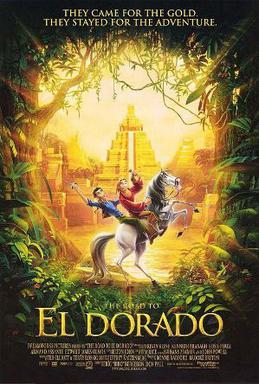
The Golden Gamble: Dreamworks' Ambitious Challenge to Disney's Reign with "Der Weg Nach El Dorado"
In the fiercely competitive landscape of animated cinema at the turn of the millennium, one studio dared to directly challenge the long-established supremacy of Disney: Dreamworks Animation. Fresh off its critically acclaimed and commercially successful Antz (1998), which famously released just weeks before Disney/Pixar's A Bug's Life, Dreamworks solidified its reputation as a formidable contender. This audacious spirit carried into its next big traditional animation venture, Der Weg nach El Dorado (The Road to El Dorado). Positioned as a grand adventure, it was designed to capture imaginations, but found itself released into the long, looming shadow cast by Disney's upcoming CGI spectacle, Dinosaur.
This wasn't just about box office numbers; it was a battle for artistic credibility, market share, and the very definition of what animated features could be. Dreamworks aimed for a distinct identity, often leaning into more mature themes, intricate character dynamics, and a slightly edgier humor compared to Disney's often family-friendly formula. Der Weg nach El Dorado, with its blend of swashbuckling adventure, buddy-comedy antics, and mythical exploration, represented a significant piece of this strategic gambit. However, as contemporary critics observed, its journey was fraught with challenges that ultimately highlighted the immense difficulty of truly dethroning the reigning animation monarch.
"Der Weg Nach El Dorado": A Promising Start to a Perilous Journey
The film immediately draws viewers into its world with an undeniably charming and energetic opening. We are introduced to Miguel and Tulio, two Spanish con artists with an unbreakable bond and a penchant for getting into trouble. Their livelihood, based on loaded dice and slick deception in a bustling Spanish port city, quickly unravels, forcing them to flee. A desperate escape lands them as unwitting stowaways on the very ships of Hernán Cortés, setting sail for the New World.
This initial sequence is a masterclass in establishing tone and character. The animation, particularly in these early moments, boasts a stylish, swashbuckling aesthetic reminiscent of classic buddy-comedies starring talents like Bob Hope and Bing Crosby. The vibrant colors, dynamic character expressions, and brisk pacing instantly captivate. It's a visually appealing and engaging setup that promises a grand adventure of discovery and mischief.
Their tumultuous journey eventually leads them away from Cortez's fleet and onto an uncharted coast. Guided by a serendipitously discovered map, Miguel and Tulio stumble upon the legendary city of El Dorado. Here, their white skin leads the indigenous inhabitants to mistake them for gods, showering them with gold and reverence. This premise cleverly sets the stage for both comedic misunderstandings and deeper thematic explorations of greed, deception, and true friendship.
Character Dynamics: The Enduring Heart of the Adventure
A significant strength of Der Weg nach El Dorado lies in the magnetic chemistry between its two protagonists. Miguel, the impulsive dreamer, and Tulio, the pragmatic planner, form a classic odd couple whose banter and evolving relationship drive much of the film's humor and emotional core. Their dynamic is the film's beating heart, often carrying scenes even when other elements might falter.
Adding another layer to this dynamic is Chel, a cunning local woman who quickly sees through Miguel and Tulio's charade. Far from a damsel in distress or a naive bystander, Chel is resourceful, street-smart, and undeniably ambitious. She represents a stark, refreshing contrast to the often-idealized "noble savage" archetype seen in other animated features, notably Disney's Pocahontas. Her inclusion allows the narrative to explore more complex interpersonal relationships and moral ambiguities, pushing boundaries beyond typical animated fare. For a deeper dive into the characters, consider reading Miguel & Tulio's Journey: The Untapped Potential of El Dorado's Characters.
Untapped Potential: A World of Adventure Left Unexplored
Despite its promising beginning and strong character foundation, Der Weg nach El Dorado unfortunately struggled to maintain a consistent artistic and technical vision throughout its entire runtime. The initial burst of stylistic confidence wasn't consistently maintained, leading to a noticeable drop-off in visual ambition as the story progressed. This was a critical point of critique at the time, especially when compared to Dreamworks' own Antz, which had previously established a distinctive visual language with innovative camera work, unique angles, and a story that defied Disney's often saccharine stereotypes.
Critics noted that the animation in Der Weg nach El Dorado often felt flat, backgrounds appeared lifeless, and character movements could seem schematic or less fluid. This exposed a noticeable technical deficit when compared to the industry leader. While Disney was meticulously animating every strand of fur on The Lion King's characters or the intricate insect worlds of A Bug's Life, Der Weg nach El Dorado lacked that overwhelming attention to detail that had become synonymous with Disney's brand. The potential for stunning visual storytelling—be it the tumultuous sea voyage, the treacherous jungle journey, or the majestic architecture of El Dorado itself—remained largely unrealized, lacking a distinct artistic signature that could truly distinguish it from its competitors.
This inconsistency meant that while the characters remained engaging, the world around them didn't always feel as alive or immersive as it could have been. The film's narrative had ample opportunity to delve deeper into themes of cultural clash, the corrupting influence of gold, and the true meaning of friendship and loyalty. However, these substantial elements were often left underdeveloped, giving the impression of a story with great potential that wasn't fully capitalized upon.
The Soundtrack and the Shadow: Why El Dorado Stumbled
Adding to the film's mixed reception was its soundtrack. While featuring the formidable talents of Elton John for songs and Hans Zimmer for the score (a duo who achieved Oscar glory for Disney's The Lion King), the music for Der Weg nach El Dorado often felt like a borrowed, rather than an inspired, contribution. The songs, though pleasant, didn't achieve the iconic status or emotional resonance of their previous collaboration, and Zimmer's score, while competent, lacked the distinctive flair that marked his more acclaimed works. It underscored the feeling that Dreamworks, in its haste to establish itself, sometimes leaned on proven formulas instead of forging its own unique sonic identity.
But perhaps the biggest hurdle for Der Weg nach El Dorado was its unfortunate release timing. The film was largely perceived as a warm-up act, a preamble to the much-hyped "Dino-Stampede" that would soon dominate cinemas in the form of Disney's Dinosaur. Disney's colossal marketing machine and the novelty of its groundbreaking photorealistic CGI for Dinosaur created an immense buzz that overshadowed almost everything else in the animated world. Audiences were primed for visual spectacle, and while Der Weg nach El Dorado offered charm, it couldn't compete with the raw technical innovation that Disney was showcasing. For a deeper look at this aspect, check out El Dorado's Visuals & Story: Was Dreamworks' Adventure Overshadowed by Dinosaurs?
This competitive environment meant that any technical or artistic shortcomings were magnified. In an era where animation was rapidly evolving, a film needed to be exceptional in every aspect to stand out. While Dreamworks had demonstrated its ability to do this with Antz, Der Weg nach El Dorado simply didn't achieve the same level of consistent brilliance, making it difficult to gain traction against the juggernaut that was Disney.
Legacy and Reappraisal: "Der Weg Nach El Dorado" Today
Despite its initial struggles and the critical perception of being overshadowed, Der Weg nach El Dorado has experienced a significant reappraisal in the years since its release. It has steadily garnered a dedicated cult following, with many viewers discovering its charms long after its theatrical run, free from the intense competitive context of its initial debut.
What endures for its fans is the genuine, heartfelt chemistry between Miguel and Tulio, their hilarious banter, and the memorable lines that have become staples in online communities. Chel's strong, independent character continues to be praised for subverting tropes. The film's vibrant animation, particularly in its character designs and expressiveness, holds up well, and the adventure, though perhaps not fully realized, remains engaging.
Today, Der Weg nach El Dorado stands as a fascinating case study in animated filmmaking. It represents Dreamworks' audacious attempt to carve out its own niche in a market dominated by a giant. While it may not have achieved the critical or commercial success that would have truly challenged Disney's reign at the time, its lasting appeal to a growing fanbase proves that a film's initial reception isn't always its final verdict. It's a testament to the power of strong characters and genuine humor, elements that transcend initial technical critiques and continue to resonate with new generations of viewers.
In conclusion, Der Weg nach El Dorado was indeed Dreamworks' ambitious challenge to Disney's animated empire. Though it stumbled under the weight of heightened expectations, inconsistent artistic execution, and unfortunate timing, it ultimately forged its own unique path. Its journey from an initially overlooked animated feature to a beloved cult classic highlights that true cinematic value often reveals itself over time, proving that even in the shadow of giants, a golden adventure can find its enduring light.